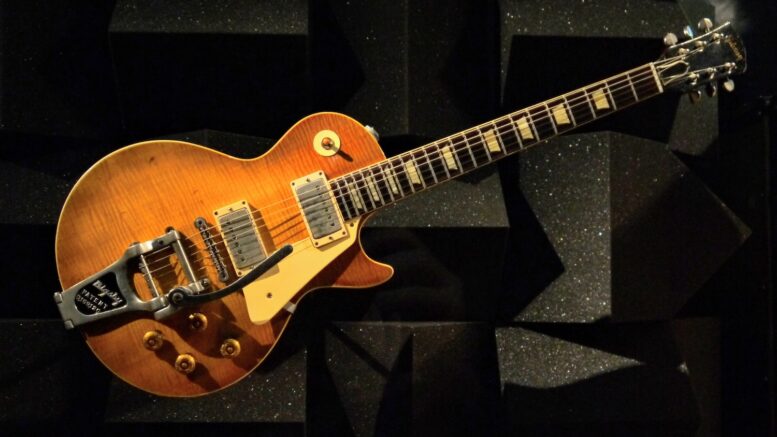
The 1959 Gibson Les Paul known as the “Keithburst” is one of rock music’s most iconic, and likely most valuable, electric guitars. Now, it’s at the centre of a public controversy covered by outlets as diverse as The New York Times and Billboard after Mick Taylor’s manager and partner alleged after it was donated to New York’s prestigious Metropolitan Museum of Art that the guitar is stolen property.
Played by Keith Richards on “The Ed Sullivan Show” on October 25, 1964, the guitar helped kickstart a surge of interest in the Les Paul model among rock fans. It was also played by Jimmy Page in a mid-1960s studio session and by Eric Clapton at an early Cream performance in 1966 before being sold to Taylor.
The key dispute around the guitar takes place around its whereabouts and ownership in 1971. It has often been claimed that the guitar was stolen from Taylor in 1971 as he and the rest of The Rolling Stones recorded Exile On Main Street in Nellcôte, a villa in France.
However, The Met claims the guitar was never stolen in 1971. In fact, it claims Taylor never owned the instrument at all. In a statement to LedZepNews, a spokesperson for the museum said: “This guitar has a long and well-documented history of ownership.”
Online rumours suggest the guitar frequently changed hands in recent decades, surfacing in guitar workshops, at Christie’s auction house in 2004 and in the hands of a Swedish collector before re-emerging in public at The Met in 2019.
Many of the elements of the guitar’s history are disputed, including the identity of its first owner, whether the alleged theft in 1971 actually happened and even the guitar’s serial number. Many of the people LedZepNews spoke to about the guitar refused to speak on the record.
However, LedZepNews has been able to piece together a lengthy, albeit much-disputed, history of the guitar using archived web pages, previous press coverage, new reporting and interviews along with research on the guitar’s history provided by The Met to LedZepNews.
1959: The guitar was manufactured by Gibson
The guitar is known to have been made by Gibson in 1959. Intriguingly, its 93182 serial number is considered high for the period and has been somewhat of a mystery. One theory is that the guitar’s serial number was originally 92182 but it was accidentally altered during repair work in the early 2000s, turning the first “2” into a “3”.
1959-1964: John Bowen or Ken Lundgren first own the guitar
John Bowen, guitarist in Mike Dean & the Kinsmen, bought the new guitar from Farmer’s, a music shop in Luton in the UK in March 1961. He then had an aftermarket Bigsby vibrato arm fitted at Selmer, a London music shop, in 1961 or 1962 before trading the guitar in at Selmer for a Gretsch Country Gentleman in late 1962. That’s according to Bowen’s brother Dick Bowen who spoke to Guitarist magazine for a September 2007 article on the guitar’s history.
However, an alternative origin for the guitar’s early ownership put forward by Larry Kulai and Greg Prevost claims Ken Lundgren of The Outlaws was the guitar’s first owner. Lundgren bought the guitar in 1959 from a shop in Nanaimo, British Columbia, Canada, before moving to London in 1962 and bringing the guitar with him. He then traded in his guitar at Selmer to purchase a Gibson Barney Kessel.
In a 2018 interview, Randy Bachman supported the claimed Canadian origin of the Keithburst guitar.
It’s possible that both Bowen and Lundgren owned the guitar during this period, with Lundgren being its first owner and Bowen then owning it between 1962 and 1964.
1964: Keith Richards purchased the guitar from Selmer
Richards is known to have bought the guitar from Selmer in 1964. He was first photographed performing with the guitar on August 13, 1964 when The Rolling Stones performed at the Palace Lido in Douglas on the Isle of Man.
An alternative explanation put forward by collector Perry Margouleff, who later helped Dirk Ziff purchase the guitar, is that Richards purchased the guitar likely in June 1964 when touring with The Rolling Stones in New York.
July 31, 1966: Eric Clapton borrowed the guitar for one of Cream’s first shows
Eric Clapton borrowed the guitar from Richards, using it for one of Cream’s first live performances at the Windsor Jazz & Blues Festival on July 31, 1966.
Mid 1960s: Jimmy Page played the guitar in a recording session
Jimmy Page was photographed playing the guitar in a London recording session in the mid 1960s. It’s possible that the photograph shows Page recording the soundtrack to “A Degree Of Murder” with Brian Jones at IBC Studios in London in late 1966, a plausible explanation for Page gaining access to equipment owned by The Rolling Stones.
1967: Keith Richards sold the guitar to Mick Taylor
In 1967, Richards entrusted Ian Stewart to sell the guitar. It has been widely reported that Stewart eventually sold the instrument to Taylor, who was then a member of John Mayall’s Bluesbreakers.
“I met [the Stones] about three years before [joining], when I wanted to buy a guitar from Ian Stewart,” Taylor recalled. “I went down there [to Olympic Studios], sort of shook their hands, and said hello, but I really didn’t meet them. They were recording Their Satanic Majesties Request at the time.”
“I was sitting in what would have been the vocal booth with Ian Stewart and trying out the guitar. I saw them through the glass window in the studio dressed up in costume, and dressed up like wizards,” he continued.
Taylor recalled the same details in a 2009 Sunday Mail interview. “In 1967 I went down to Olympic Studios in London to buy a Gibson Les Paul guitar – which was once owned by Keith Richards – from their Scottish road manager Ian Stewart,” he said.
“They were recording the album Their Satanic Majesties and wearing those silly costumes from the album sleeve. I only saw them through a glass partition. That was as close as I got.”
This timeline places the guitar sale to Taylor between February and October 1967.
Taylor’s purchase of the guitar was also covered in Andy Babiuk and Greg Prevost’s 2013 book “Rolling Stones Gear”.
“I asked Mick about how he got this guitar from Keith,” Babiuk told Music Radar. “Before he joined the Stones, Mick was in John Mayall’s Bluesbreakers. He had to play a Les Paul to mimic the classic Clapton-era Bluesbreakers sound, the Les Paul through the Marshall. He got a Les Paul during this time, but it was stolen. Finding another Les Paul in London at that point in the ‘60s wasn’t so easy.
“Ian Stewart, the Stones’ roadie, told Mick that he could buy a ’59 Les Paul from Keith, and so Mick went to Olympic Studios, where the Stones were recording Satanic Majesties. While the rest of the band was in another room, Mick worked out a price and bought the guitar. He used it during the rest of his time in the Bluesbreakers.
“When Mick joined the Stones, he brought his guitars with him and this was one of them. Keith apparently didn’t know anything about the fact that his guitar had been sold, so he started using it – when you’re in the Stones, a guitar’s a guitar. Mick played this Les Paul while he was in the Stones, but you would also see Keith with it; in fact, he played it at Altamont.”
Jeff Allen, Taylor’s former manager in the 1990s, has given a different account of how Taylor acquired the guitar. Allen told The Associated Press in August that Taylor “told me he got it as a present from Keith”.
The Met, however, disputes that this sale or gift ever took place, despite Taylor having spoken repeatedly about the transaction as far back as June 22, 1979. Instead, the museum claims Richards never sold the guitar and continued to own it until 1971.
Research notes on the guitar’s history provided by The Met to LedZepNews omit any mention of Richards selling or gifting the guitar to Taylor. The Met’s history of the guitar’s ownership states that Richards acquired the guitar “before August 1964” and owned it “until 1971”.
1968: Mick Taylor began playing the guitar during live performances
Photographs posted online show that Taylor used the guitar on stage as early as March 16, 1968.
June-July 1969: Mick Taylor joined The Rolling Stones and performed with the guitar
Taylor joined The Rolling Stones in June 1969, playing the guitar on stage in Hyde Park as part of his live debut with the band on July 5, 1969.
March 1970: Mick Jagger used the guitar
Mick Jagger can be seen playing the guitar in photographs showing The Rolling Stones recording Sticky Fingers at Stargroves in March 1970.
1971: The guitar was stolen, given away or sold
A leading theory for the guitar’s disappearance in 1971 is that it was stolen after Taylor brought his guitar with him to Nellcôte in France in April 1971, where The Rolling Stones recorded Exile On Main Street.
The guitar was allegedly stolen during the day along with eight other guitars, Bobby Keys’ saxophone and Bill Wyman’s bass guitar. Rumours have suggested that the culprits were drug dealers owed money by Richards.
However, there has been frequent scepticism that the guitar was stolen from Nellcôte, in part because no photographs have surfaced showing the instrument in the property. Other instruments known to have been stolen in the robbery were photographed in the house.
Alternative explanations for the theft include it being stolen during The Rolling Stones’ 1970 tour or being left behind on a train platform. It has also been claimed that Taylor may have sold the guitar around this time, although it’s unclear who its buyer may have been.
The Met, however, claims a different history for the guitar in this period. It told The New York Times that the guitar wasn’t stolen at Nellcôte. Instead, it claims the instrument’s owner in 1971 was Adrian Miller, an acquaintance of Rolling Stones manager Andrew Loog Oldham who would go on to manage the band The Babys starting in 1974.
The museum “lists Adrian Miller as the owner of the Les Paul in 1971, but it does not say that he bought the guitar from Richards or specify how Miller, who died in 2006, acquired it,” the newspaper reported.
In 1971, Miller ran Panda Productions with Pat Mehegan, according to articles published in Billboard and Cashbox in 1970. Based in London, they specialised in promoting albums in the US in conjunction with Crewe Records. It’s unclear how Miller may have known Richards or Taylor.
1971-1974: Phil Carson or Adrian Miller gave the guitar to Cosmo Verrico
Regardless of exactly how or even whether the guitar was stolen, it seems clear that the guitar passed out of the hands of The Rolling Stones around 1971.
David Brewis, who was involved in the sale of the guitar around 2003, told Guitarist magazine in its September 2007 issue that Heavy Metal Kids guitarist Cosmo Verrico claimed to have been presented with the guitar by Atlantic Records executive Phil Carson.
“I’d spoken to Cosmo and he told me he’d got the guitar when he was in a band called the Heavy Metal Kids and was signed to Atlantic Records. His own Les Paul had gone missing in transit or had been stolen, I think, and he had no guitar. He told his guy at Atlantic that he needed a Les Paul and was presented with this guitar by someone called Phil Carson, who ran Rolling Stones Records out of Atlantic. It was a ‘the band has no use for this guitar now, you can have it’ sort of thing,” Brewis claimed.
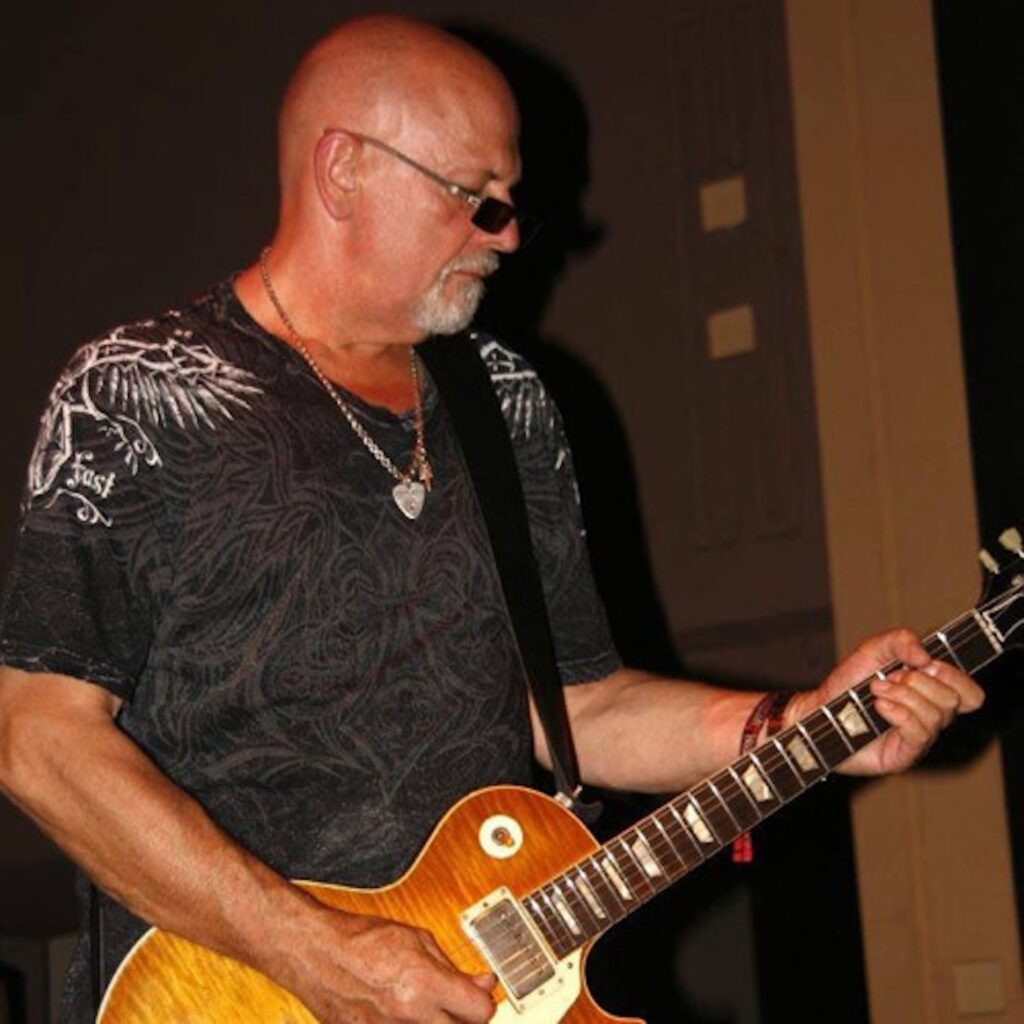
Verrico’s first period as part of Heavy Metal Kids lasted from 1972 to 1973 before he rejoined the band in late 1974, giving a likely window for him to have received the guitar.
It’s possible that the guitar then had extensive work around this period. “The Les Paul was completely stripped in the mid-70’s, the Bigsby was taken off, new PAF’s were put in, the electrics were renewed,” Mathijs van Heteren, the former administrator of an unofficial Rolling Stones website,wrote in a 2007 forum post.
The Met, however, claims a different person was involved at this point. Instead of Carson giving the guitar to Verrico, it claims Miller sold him the guitar in 1971 before he joined Heavy Metal Kids.
Research notes on the guitar’s history provided by The Met to LedZepNews state that Richards owned the guitar until 1971. Then, it simply states: “Cosmo Verrico, London, acquired 1971 from Adrian Miller (traded for £125 plus a 1959 Gibson ES 175 with PAFs)”.
LedZepNews understands that Verrico has claimed to have received the guitar from Miller in return for a guitar purchased on Denmark Street in London by former Deviants guitarist Sid Bishop, a transaction that Bishop has recalled.
1974: Cosmo Verrico sold the guitar to Bernie Marsden
In 1974, Verrico sold the guitar to guitarist Bernie Marsden for £400, multiple accounts and The Met’s records state.
1974: Bernie Marsden sold the guitar to Mike Jopp
A week later, Marsden sold the guitar for £450 to Mike Jopp, former guitarist in the band Affinity. He generated a quick £50 profit from the sale.
“The guitar ended up in the hands of a London collector who decided he could earn much more money if he brought it back in its ‘original’ Keith-era state, so he installed a new Bigsby and new (but vintage) PAF’s,” van Heteren claimed.
The early 2000s: Clive Brown and Dick Knight worked on the guitar
Guitar restorer Clive Brown worked on the guitar in “the early 2000s”, according to Brewis in the 2007 Guitarist article.
Guitar dealer Richard Henry, who later helped sell the guitar in 2006, claimed in a 2007 email that Jopp also sent the guitar to Dick Knight who repaired some neck damage.
Around 2003: Mike Jopp sold the guitar to a business in New York
Brewis brokered a deal around 2003 to sell the guitar to a “collector/memorabilia company in New York” according to the September 2007 issue of Guitarist magazine.
The Met’s research notes on the guitar’s history repeat this claim, stating: “New York collection, 2003”.
Brewis’ own Rock Stars Guitars website shows a number of photographs of the guitar from the time.
Van Heteren has claimed that the guitar sold for $300,000, presumably around this time.
December 17, 2004: The guitar was listed for sale at Christie’s
Christie’s announced in a November 24, 2004 press release that it would offer the guitar for sale in its upcoming Rock & Roll and Entertainment Memorabilia auction on December 17, calling it a “highlight” of the sale. No estimate for the guitar was published publicly.
The Christie’s auction catalogue featured a detailed description of the guitar: “A 1959 Gibson Les Paul guitar, Serial No. 93182, Sunburst finish, single cutaway body, Maple top, cherry finish sides and back in Honduras Mahogany, Grover tuners, 22 fret Brazilian Rosewood fingerboard with mother-of-pearl inlays, Gibson logo inlayed to head, one Humbucking ‘patent applied for’ zebra rhythm pickup, one Humbucking ‘patent applied for’ double black lead pickup, Gibson ABR1 Tuneomatic bridge, four rotary controls, selector switch, Bigsby tailpiece, together with 1960s Les Paul hardshell case,” it read.
“Played by Keith Richards of the Rolling Stones on the Ed Sullivan Show (1964/1965), Ready Steady Go! (1964) and during various Rolling Stones appearances from the same era,” it continued. “Also played by Mick Jagger during Beggar’s Banquet recording sessions. Additionally present are two certificates of authenticity (facsimile copies) from guitar specialists Tony Bacon and Clive Brown as well as four 8 by 10 inch images of Richards playing the guitar and two of Mick Jagger playing the guitar and additional related documents.”
A Getty Images photograph taken on December 10 shows the guitar was indeed the “Keithburst”.
It has been rumoured that someone connected to The Rolling Stones, either Richards or Taylor, attempted to reclaim or purchase the guitar around this time. “Rumor has it that a representative of Keith Richards laid claim to the guitar but this claim wasn’t followed through,” Henry claimed on his website in a passage that was later deleted.
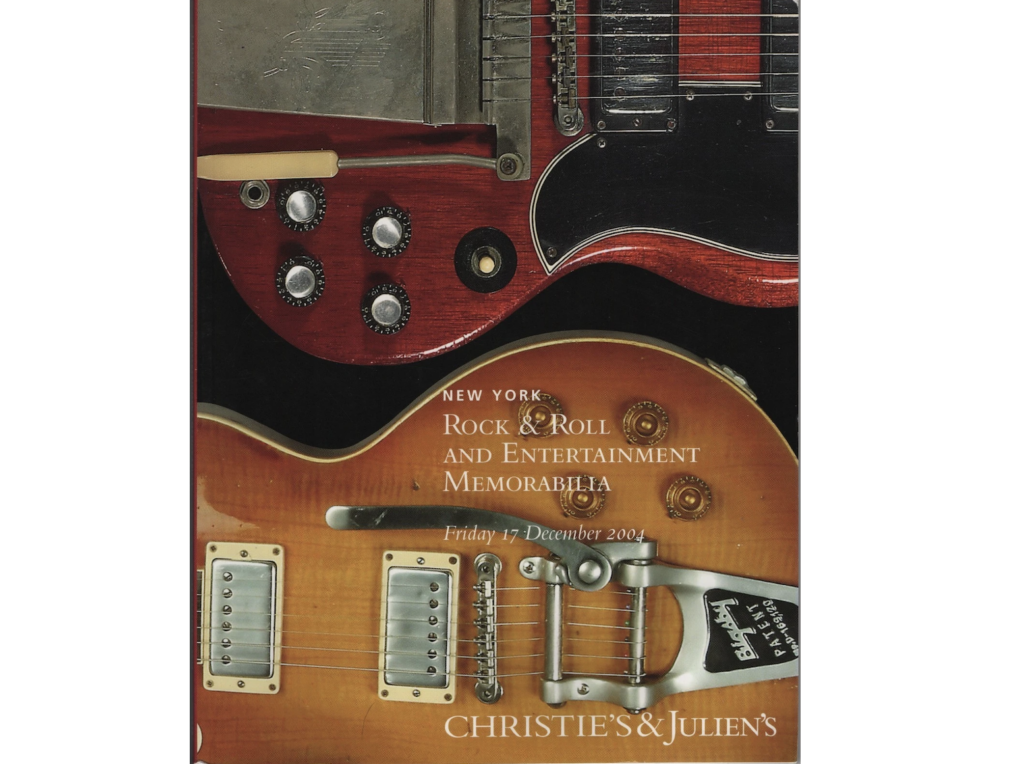
Despite the guitar being featured on the cover of the auction catalogue and bids reaching $340,000, the guitar failed to meet its reserve and went unsold.
It has also been rumoured that the owner of the guitar turned down a private offer of $600,000 for it made around this time.
In response to a request for comment from LedZepNews regarding the attempted sale at auction of the guitar, a spokesperson for Christie’s said: “Christie’s does not offer property unless it believes good title will pass to the buyer.”
2006: The guitar was bought by Peter Svensson
The guitar was sold in 2006 to a musician and collector in Sweden, with rumours placing the sale price between $750,000 and $1 million.
The buyer is widely reported to have been Peter Svensson, a Swedish record producer and former member of The Cardigans who is known to collect vintage Gibson Les Paul guitars. He donated a 1952 Gibson Les Paul to The Met in 2024 in memory of his later father, the museum’s website shows.
It has been claimed the sale took place through Music Ground, a well-known instrument dealer in the UK. A 2007 forum post seems to back up this claim, while Svensson was known to have been a customer of the business.
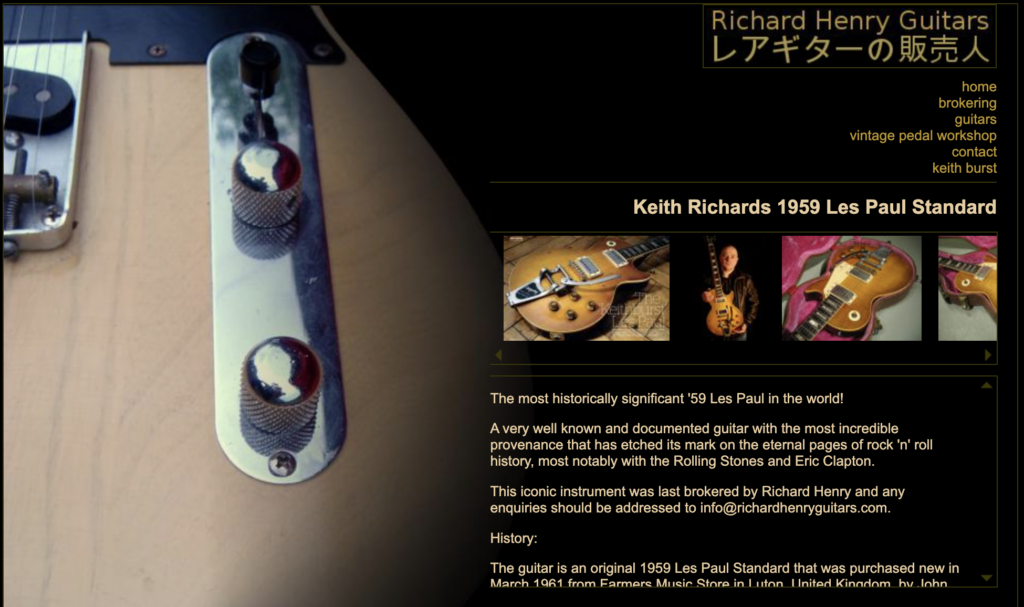
Henry, the guitar dealer, worked for Music Ground at the time and published photographs of the guitar on his website, archived copies of the guitar’s since-deleted web page show.
2007: The guitar was supposed to be in Guitarist magazine, then it wasn’t, then it was
In February 2007, Guitarist magazine published a preview of its upcoming April 2007 issue which showed that it planned to feature a rare photograph of the “Keithburst” guitar on the cover, as well as an article inside the magazine about the guitar and its history.
But when the April 2007 issue hit newsstands in March 2007, the cover feature on the guitar was nowhere to be seen. Instead of the planned cover featuring the “Keithburst” guitar, a photograph of Stevie Ray Vaughan was used instead.
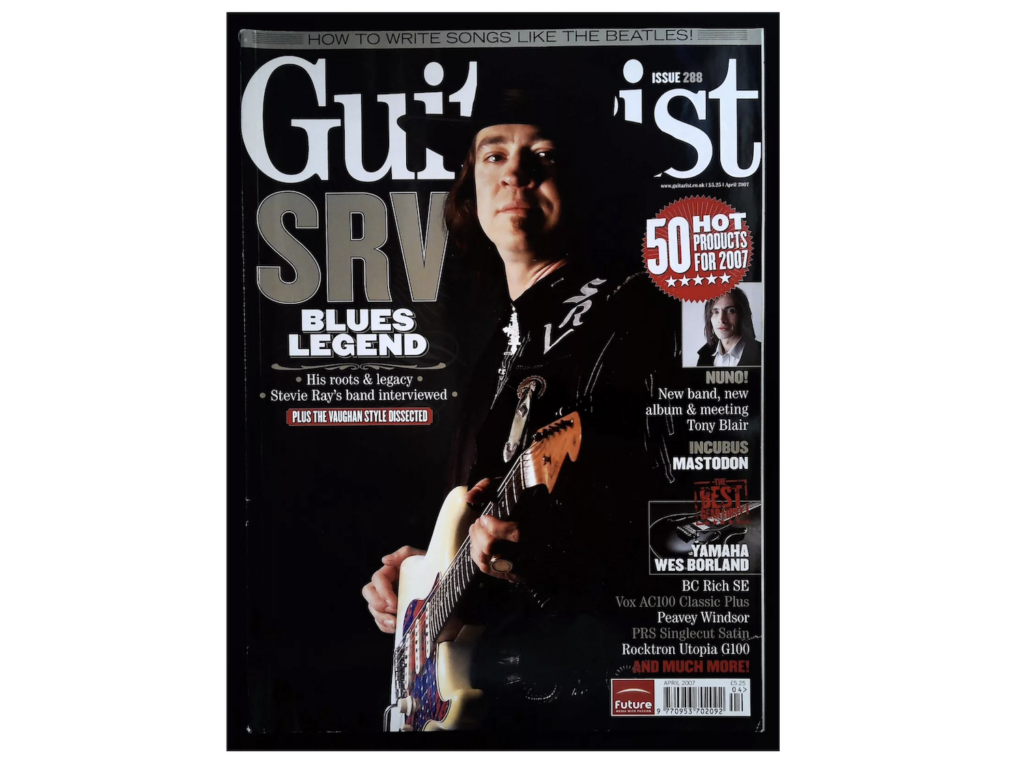
“We’re sorry about this. All was looking good with the LP as you could see from the previous issue. We photographed it, put the story together… then unearthed a potentially sticky aside RE previous owners. The upshot is that we can’t run the piece – sorry if you feel robbed of a great feature (I do too for what it’s worth),” the magazine’s then-editor, confusingly also called Mick Taylor, wrote to reader Chris Maddox, according to a 2007 forum post.
Writing in a further email to Maddox, Taylor the magazine’s editor added: “we’re not going to say that the guitar was ‘stolen’ because that’s not the case. There may be some question as to its ownership over the years, even though it was given in good faith as we understand. In short, the guitar has thrown up a significant question mark that we don’t want to get involved in at this stage.
“I’m afraid I couldn’t send you pictures in any event as they’re under copyright to the owner (of the pics, not the guitar). We’re currently trying to find away to put the guitar in the mag, and not get involved in any potential disputes / disagreements.”
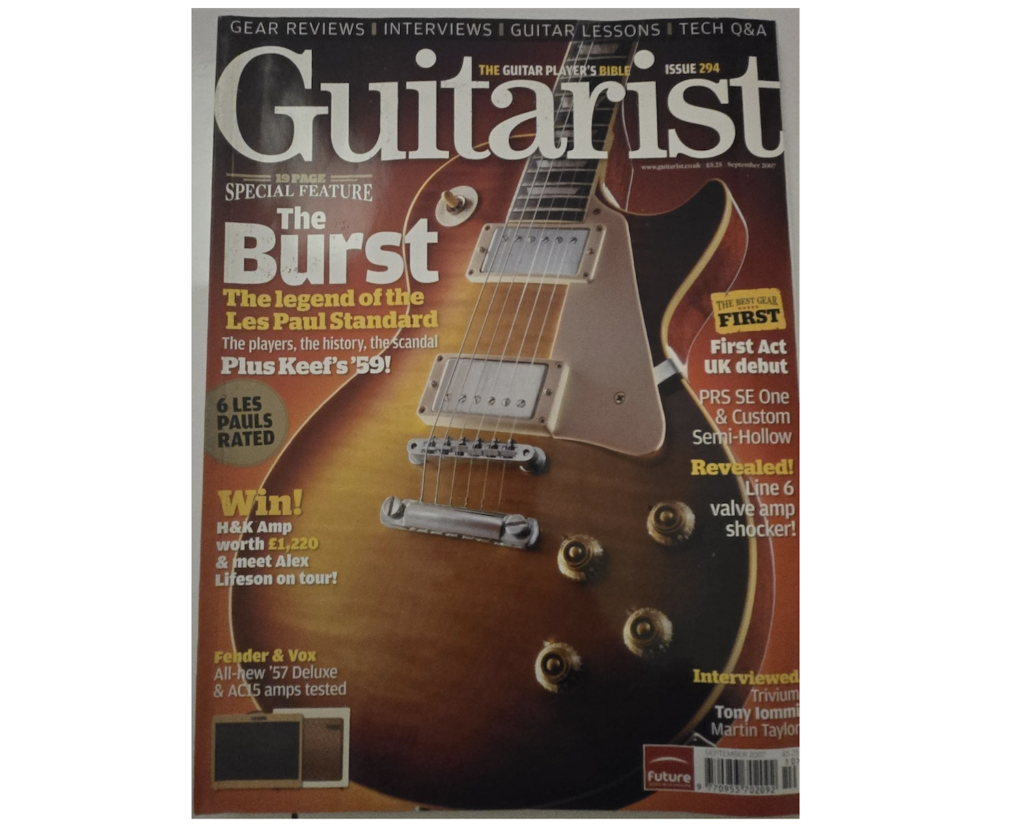
An article about the guitar and its history, complete with photographs, eventually appeared in the magazine’s September 2007 issue.
2013: The guitar remained in Sweden and was photographed for a book
Posts from 2013 on the Les Paul Forum indicate that the guitar remained in the collection of the Swedish buyer at this time. User “API” claimed to have recently played the guitar at the home of a friend. “A friend of mine here in Sweden owns it and it’s not for sale,” they added.
However, a different poster on the same forum said: “Speak to our friend again and I think you’ll find that he will entertain a serious offer. Admittedly the guitar is not being actively marketed right now. Doesn’t mean it’s not for sale.”
A new photograph showing the guitar was published in the 2013 book “Rolling Stones Gear: All the Stones’ Instruments from Stage to Studio” by Andy Babiuk.
2016: Peter Svensson sold the guitar to Dirk Ziff
The New York Times reported that “ten years after” the guitar’s 2006 sale to Svensson, Svensson then sold the instrument to Ziff, a wealthy American guitar collector known to have amassed a legendary collection of instruments with the help of Margouleff.
March-October 2019: The guitar was shown at the Play It Loud exhibition at The Met
The trail of the guitar went cold until March 2019 when The Met unveiled its “Play It Loud” guitar exhibition. The exhibition included the famous “Keithburst” guitar, which the museum said at the time was on loan to the institution from Margouleff, not Ziff.
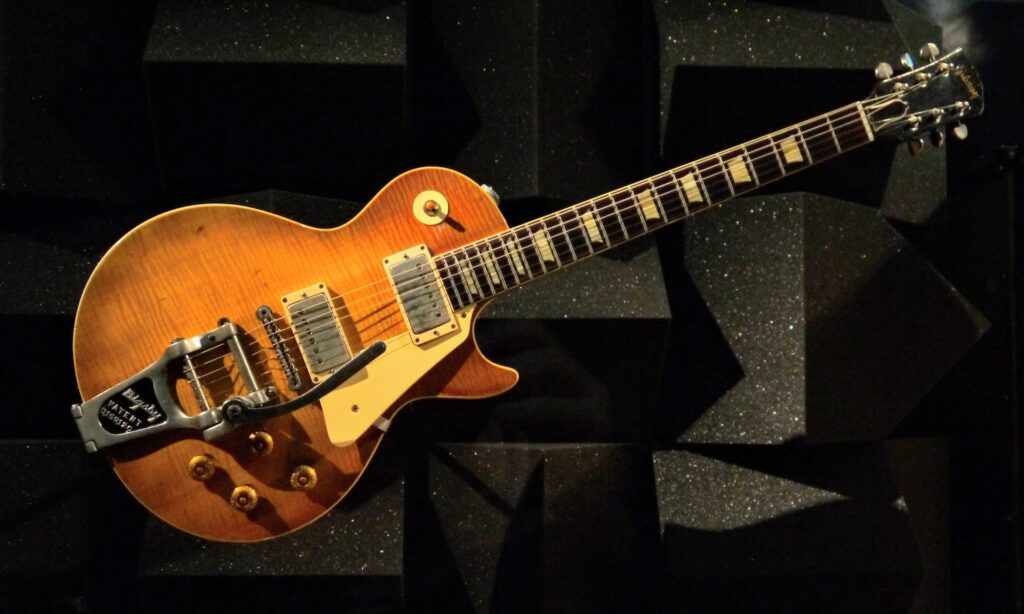
The guitar did not travel with the exhibition in December 2019 when it moved to the Rock & Roll Hall of Fame.
2025: The guitar was donated to The Met by Dirk Ziff
On May 19, The Met announced a “landmark gift of more than 500 of the finest guitars from the golden age of American guitar making” from Ziff.
The announcement stated that Ziff’s donation included “the 1959 sunburst Les Paul guitar used by Keith Richards during The Rolling Stones’ first appearance on The Ed Sullivan Show in 1964, which ignited interest in this legendary model”.
In a New Yorker article about the donation published on the same day, it was claimed that “in the spring of 2027, the museum will open a permanent gallery devoted to the evolution and cultural impact of the American guitar.”
As part of The Met’s announcement of the donation, Page said that “as a result of this incredible exhibition, I have now been made aware that The Met is building a permanent gallery to celebrate the American guitar. To know that there is so much passion behind this project is thrilling. I would like to take my hat off to the people who have been behind this—and to The Met for its dedication to construct something that is going to be of such great importance for generations to come. An inspirational arena for people old and young alike.”
July 2025: Mick Taylor’s partner and manager spoke out about the guitar
The New York Post reported in a July 10 article that Taylor’s partner and manager Marlies Damming had identified the guitar donated to The Met as the same instrument allegedly stolen from Taylor in 1971.
“There are numerous photos of Mick Taylor playing this Les Paul, as it was his main guitar until it disappeared. The interesting thing about these vintage Les Pauls (from the late 1950s), is that they are renowned for their flaming . . . which is unique, like a fingerprint,” she told the newspaper.
An unnamed source also told the newspaper that “Taylor says he never received compensation for the theft and is mystified as to how his property found its way into the Met’s collection.”
August 2025: The Met denied that Mick Taylor ever owned the guitar
The Met broke its silence in an article published by The New York Times on August 1 which reported that “The Met says Taylor played the instrument, but never owned it, and that for decades the guitar has had a public history without apparently drawing a claim from Taylor.”
A spokesperson for the museum gave the Times the statement they issued to LedZepNews: “This guitar has a long and well-documented history of ownership.”
According to the museum’s account of the guitar’s history which it shared with the newspaper and subsequently with LedZepNews, Richards owned the guitar until 1971 when it then emerged in the hands of Miller who sold it to Verrico, also in 1971.
In an email to the museum quoted by The New York Times, Damming said: “We would like the Metropolitan Museum to make the guitar available so that we can inspect it, and confirm its provenance one way or the other.”
Responding to The Met’s claims, Damming told The Associated Press something similar: “An independent guitar expert should be able to ascertain the guitar’s provenance one way or the other.”
Do you have any information to share on the guitar’s history? You can reach us on ledzepnews@gmail.com
Marlies Damming, Mick Taylor’s partner and manager, declined to comment. LedZepNews attempted to reach Dirk Ziff through Vere Initiatives, a philanthropic organisation he established in 2022. Perry Margouleff did not respond to a request for comment sent to Joseph E Gallo, the lawyer who represented him in a 2018 lawsuit against Jeff Beck.
Richard Henry and David Brewis were contacted for comment. LedZepNews was unable to reach Peter Svensson, Phil Carson or Mike Jopp to request comment.
I finally had to stop reading this bc my eyes were getting crossed! All I can say is: it must not have had the “it” factor – the mojo– if it did, it would not have turned over more times than a London underground turnstile! No, the truly majestic guitars are held on to… tightly.
Wouldn’t a likely explanation for the change-of-ownership of the Les Paul in 1971 simply be that Keith Richards sold it to one of the many drug dealers that littered Nellcôte? Richards, by his own admission, was deep into his addiction and forgot (or chose to forget) that he originally sold the guitar to Taylor via Ian Stewart?